
Guide
How Nightmares Affect Preschoolers' Sleep
Learn how nightmares can affect preschoolers' sleep, including bedtime fears, night wakings, difficulty returning to sleep, and ways parents can provide reassurance and support.
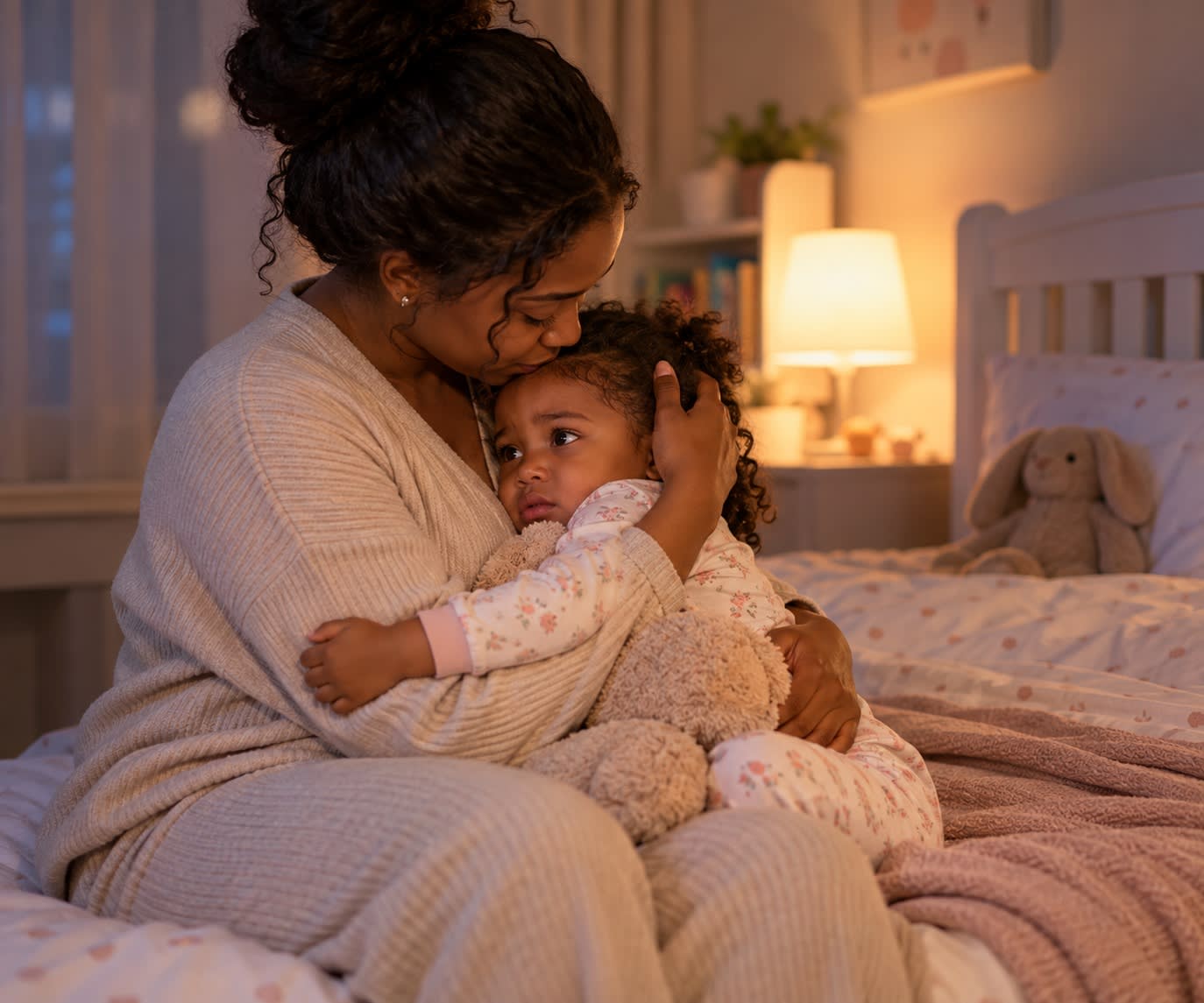
How Nightmares Affect Preschoolers' Sleep
By Tiny Sleep Studio
Why Do Preschoolers Have Nightmares?
Nightmares can become more noticeable during the preschool years because children's imaginations are developing rapidly.
Preschoolers are beginning to understand stories, characters, danger, and emotions in more complex ways, but they do not always have the ability to separate an imagined threat from a real one when they are frightened.
A scary dream can feel completely real to a preschooler.
Your child may wake crying, call for you, refuse to return to their room, or become afraid that the frightening thing from the dream is still nearby.
For parents, a single nightmare can turn into a difficult night. For some children, repeated nightmares can also begin to affect their willingness to fall asleep.
How Do Nightmares Affect Sleep?
A nightmare can interrupt sleep suddenly and completely.
Unlike a brief partial awakening, a child who has had a frightening dream may become fully alert and seek reassurance from a parent.
After waking, your preschooler may have difficulty settling back down because they are now afraid to close their eyes and return to sleep.
The child may worry that the dream will happen again.
This can create a cycle in which bedtime becomes associated with fear.
A child may begin delaying sleep, asking a parent to stay nearby, sleeping with the lights on, or repeatedly checking the room.
Nightmares vs. Night Terrors
Nightmares and night terrors are different experiences.
A child who has a nightmare usually wakes and can often recognize a parent, seek comfort, and remember at least part of the frightening dream.
Night terrors generally happen during deeper sleep.
A child may appear terrified, scream, sit up, or move around while remaining partly or completely unaware of the parent's attempts to comfort them.
They may not remember the episode the next morning.
Understanding the difference can help parents respond appropriately.
If you are unsure whether your child's nighttime episodes are nightmares, night terrors, or something else, discuss the pattern with your pediatrician.
Why Does My Preschooler Suddenly Fear Bedtime?
After a frightening dream, bedtime itself can become a reminder of the experience.
Your child may remember that the last time they went to sleep they woke up scared.
Preschoolers can also develop fears about darkness, monsters, strangers, noises, or being alone.
Once imagination becomes more active, ordinary nighttime sounds can feel much more significant.
This does not mean that your child is being difficult.
Your preschooler may genuinely believe that something frightening could happen again.
What Should I Say After a Nightmare?
Your first response should focus on helping your child feel safe.
A calm hug, reassuring voice, and brief explanation can help your child come back to reality.
You might say, "That was a scary dream. You are awake now, and you are safe. I am here with you."
There is no need to give a long explanation in the middle of the night.
Preschoolers are often too tired and emotionally activated to process a complicated conversation.
Simple, consistent reassurance is usually more helpful.
Should I Tell My Child It Was Just a Dream?
It is appropriate to explain that a nightmare was a dream, but try not to dismiss the child's fear.
Saying "It was just a dream" may be factually correct, but your child's feelings are still very real.
A more supportive response might be, "It was a dream, and it felt scary. But the dream is over, and you are safe."
This validates the experience without reinforcing the idea that the frightening event actually happened.
Should I Let My Preschooler Sleep With Me?
There is no single answer that works for every family.
Bringing your child into your bed after a nightmare may provide immediate comfort, but it can also become the new expectation if it happens regularly.
If your goal is for your child to continue sleeping in their own room, you can provide reassurance there.
Sit beside your child, offer a cuddle, turn on a small night-light, or stay nearby for a short period.
If your family is comfortable with occasional bed-sharing, that is a family decision.
What matters most is understanding what pattern you want to establish going forward.
What If My Child Is Afraid to Go Back to Sleep?
A preschooler may be afraid that the nightmare will return as soon as they fall asleep.
This can lead to repeated requests for water, another story, a parent to stay, or the bedroom door to remain open.
You can acknowledge the fear without allowing bedtime to become an endless negotiation.
"I know you are worried about having another scary dream. You are safe, and your body needs sleep."
A predictable comfort routine can help your child transition back to sleep without turning the rest of the night into an extended wake period.
Can a Night-Light Help?
A small night-light can be helpful for a child who has developed a fear of darkness after nightmares.
The goal is not to make the bedroom bright, but to give your child enough light to feel oriented and secure.
Some children also benefit from having a familiar comfort object nearby.
A favorite stuffed animal or other age-appropriate comfort item can become part of the bedtime routine and provide reassurance when a child wakes.
The most important factor is that the sleep environment remains calm and predictable.
How Can Parents Prevent Bedtime From Becoming Scary?
The way you talk about sleep can influence how your child thinks about nighttime.
Try to avoid repeatedly warning your child about nightmares or asking every morning whether they had another bad dream.
Instead, keep bedtime focused on positive, predictable routines.
Reading gentle stories, talking about the day, cuddling, and using familiar phrases can help create a sense of safety.
If your child is particularly sensitive to frightening stories, movies, television shows, or conversations, consider whether those experiences are contributing to nighttime fears.
What About Scary Shows and Stories?
Preschoolers can be strongly affected by frightening content even when adults consider it harmless.
A character being chased, a monster appearing suddenly, or a tense scene may stay in a young child's imagination long after the screen is turned off.
If nightmares become frequent, look at what your child is watching and hearing during the day.
Reducing frightening or highly stimulating content, particularly close to bedtime, may help.
Remember that children differ significantly in sensitivity.
One preschooler may enjoy a particular story while another may find it frightening.
Can Stress Cause More Nightmares?
Changes in a child's environment can sometimes coincide with more frequent nightmares.
Starting preschool, moving homes, welcoming a new sibling, traveling, family changes, illness, or other stressful experiences can affect sleep.
Preschoolers may not always have the words to explain what is bothering them.
Their worries may show up through bedtime resistance, nighttime waking, clinginess, or frightening dreams.
Extra connection during the day can help.
Give your child opportunities to talk, play, draw, and process experiences in ways that match their developmental level.
How Should I Handle Repeated Nightmares?
If nightmares happen occasionally, reassurance and a return to the normal bedtime routine may be all your child needs.
If nightmares are happening repeatedly, look for patterns.
Consider whether they occur after particular stories or shows, during stressful periods, or alongside changes in the child's schedule or routine.
You can also help your preschooler create a calming bedtime routine and practice simple coping strategies during the day.
The goal is to help the child feel capable and safe rather than to make nighttime fear the center of every conversation.
Should I Wake My Child From a Bad Dream?
You generally do not need to wake a sleeping child simply because you think they may be dreaming.
If your child is sleeping peacefully, allowing sleep to continue is usually appropriate.
If your child wakes on their own and is frightened, respond calmly and help them become oriented to their surroundings.
For children who have episodes that look more like night terrors, attempting to fully wake them during the episode may not be helpful.
If the episodes are frequent, disruptive, or concerning, talk with your pediatrician.
When Should I Be Concerned About Nightmares?
Occasional nightmares are a normal part of childhood.
However, it is worth discussing frequent or severe nightmares with your pediatrician, especially if they are consistently disrupting sleep or affecting your child's daytime functioning.
Also seek guidance if nightmares occur alongside significant anxiety, trauma-related concerns, breathing problems, unusual movements during sleep, injuries, or other symptoms that concern you.
A sudden major change in sleep deserves attention to the whole child rather than assuming it is simply a phase.
The Bottom Line
Nightmares can have a powerful effect on preschool sleep because young children experience dreams very vividly and may not yet have the emotional tools to separate an imagined threat from a real one.
A frightening dream can lead to nighttime waking, fear of returning to sleep, bedtime resistance, repeated requests for reassurance, and a stronger need for a parent to remain nearby.
The goal is not to tell your child that there is nothing to be afraid of and expect the fear to disappear.
Instead, offer calm reassurance, validate the feeling without reinforcing the fear, and help your child return to a predictable sleep routine.
A Responsive Approach to Preschool Nightmares and Sleep
At Tiny Sleep Studio, I believe nighttime fears deserve to be met with connection rather than shame or dismissal.
A preschooler who wakes frightened does not need to be taught that their fear is silly.
They need help understanding that they are safe.
We can support a child through nightmares while also protecting healthy sleep habits.
That may mean providing reassurance in the child's room, adjusting the bedtime routine, reducing frightening stimulation, addressing schedule issues, or gradually helping the child become comfortable returning to sleep independently.
Nightmares do not have to become a permanent sleep problem.
With patience, predictability, and developmentally appropriate support, most children can move through periods of nighttime fear while continuing to build a positive relationship with sleep.