
Article
My Baby Won't Sleep in the Crib: Why It Happens and How to Help
Learn why your baby may struggle to sleep in the crib and explore gradual, responsive ways to help them become more comfortable with their sleep space.
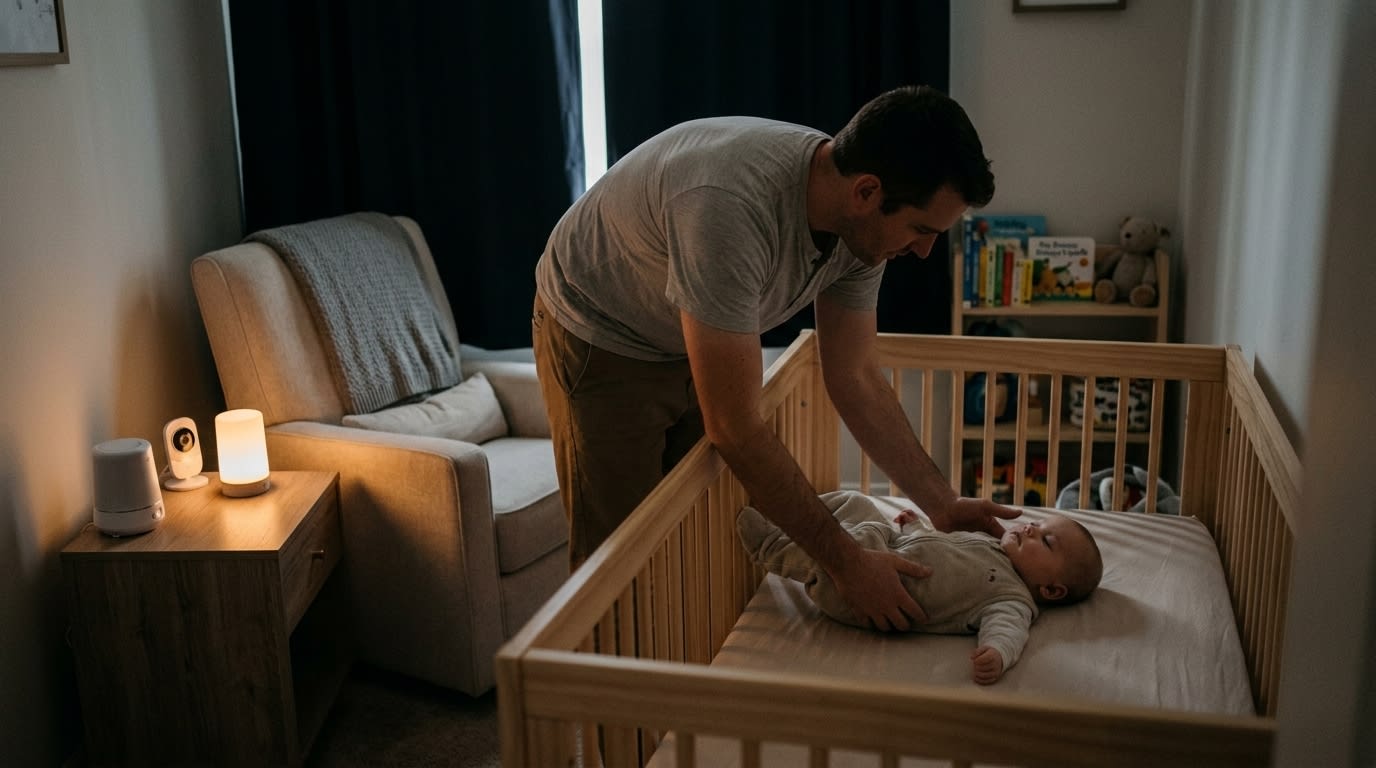
My Baby Won’t Sleep in the Crib: Why It Happens and How to Help
Why Won’t My Baby Sleep in the Crib?
Many babies are perfectly content to sleep in a parent's arms, on a chest, or during a contact nap but become upset the moment they are placed in the crib. This can leave parents wondering whether their baby simply hates the crib. Usually, the crib itself is not the problem. Your baby may be reacting to the change from a warm, moving, familiar environment to a still sleep surface. The transition can be especially noticeable when your baby has fallen asleep while being held, fed, rocked, or bounced.
The goal is not to force your baby to love the crib immediately. It is to gradually help your baby associate the crib with feeling safe, comfortable, and ready for sleep.
Why Does My Baby Sleep Better in My Arms?
Being held provides warmth, movement, pressure, familiar smells, and the sound of your breathing and heartbeat. Those sensory experiences can help regulate a young baby's nervous system. A crib provides a very different experience. It is flat, firm, still, and separate from the caregiver. A baby who protests the crib may simply be noticing this dramatic change. It does not necessarily mean that your baby is incapable of sleeping independently or that you have created a bad habit.
Could My Baby Be Used to Contact Sleep?
If your baby regularly falls asleep while being held, contact sleep can become the familiar pathway into sleep. Your baby may begin expecting that same experience every time they are tired. There is nothing inherently wrong with contact naps or holding your baby to sleep. The question is whether the arrangement is sustainable for your family. If you would like your baby to sleep in the crib, you can gradually introduce the crib as another comfortable place to sleep rather than trying to change every sleep at once.
Start With One Sleep at a Time
You do not have to move every nap and bedtime into the crib on the same day. Choose one sleep period to practice. Some families find the first nap a useful place to begin because the baby may be easier to settle than at the end of an exhausting day. Other families prefer to begin with bedtime because nighttime sleep pressure is stronger. There is no universally correct starting point. Choose the sleep period that gives you the best chance of having a calm, consistent practice opportunity.
Make the Crib Part of the Routine
The crib does not have to appear only when it is time to separate from you. During awake periods, you can spend a few calm moments near the crib, talk to your baby, sing, or let your baby look around the room while you are close. The purpose is not to make the crib a playpen. It is simply to make the sleep environment familiar rather than something your baby only experiences when being put down. Over time, familiarity can reduce some of the surprise associated with the transition.
What If My Baby Cries the Moment I Put Them Down?
Crying is communication, and your baby's response gives you information. If your baby becomes upset immediately, you can pick them up, calm them, and try again. You do not have to choose between immediately abandoning the crib and forcing your baby to remain there while distressed. A responsive approach can involve several attempts. Pick up, soothe, and try again when your baby is calm. Some days will go better than others, and that is normal.
Try the Transfer More Slowly
The transition from your arms to the crib can be easier when it is slow and predictable. Keep your baby close to your body as you lower them and avoid creating a sudden change in position. Once your baby is on the sleep surface, give them a moment before immediately walking away. A calm hand on the chest or gentle verbal reassurance may help some babies settle. There is no magic transfer technique, and some babies are simply more sensitive to movement than others.
What About Drowsy but Awake?
You may have heard that every baby should be placed in the crib drowsy but awake. While this can be useful for some babies, it is not a requirement. Some babies settle beautifully when placed down sleepy but awake. Others become completely alert as soon as they touch the mattress. Instead of treating drowsy but awake as a test, think of it as one option. You can experiment with different levels of sleepiness and gradually help your baby become more comfortable settling in the crib.
Could the Baby Be Overtired?
An overtired baby may have a harder time accepting the crib. If your baby has been awake too long, they may become increasingly upset as you try to settle them. Look at age-appropriate awake periods, naps, feeding, and the overall daily rhythm. A baby who is consistently difficult to put down may need a schedule adjustment. However, not every crib protest is caused by overtiredness. Temperament, developmental stage, hunger, discomfort, and sleep associations can all play a role.
Could the Baby Be Undertired?
A baby who has had a lot of daytime sleep or has not built enough sleep pressure may also resist being put down. If your baby is cheerful and alert every time you try to place them in the crib, look at the timing of the sleep attempt. As babies grow, their sleep needs change. A schedule that worked a few weeks ago may need to be adjusted as naps consolidate and awake periods lengthen.
Could the Crib Environment Be the Problem?
Consider the sleep environment as well. Temperature, light, noise, clothing, and the overall comfort of the sleep space can affect how easily a baby settles. A dark or dim room, a comfortable temperature, and a consistent sleep routine can help create predictable sleep cues. If you use white noise, keep the device away from the crib and at a safe volume. The crib itself should remain a clear, firm, flat sleep surface with no loose items or other unsafe sleep products.
What If My Baby Only Sleeps in the Car or Stroller?
Movement can be extremely soothing to babies. If your baby regularly falls asleep in the car, stroller, or while being rocked, they may begin to associate movement with sleep. This does not mean movement has to disappear from your routine immediately. You can gradually introduce periods of settling without movement while continuing to use movement when necessary. For sleep, however, follow current safe-sleep recommendations and move your baby to an appropriate sleep surface when needed rather than relying on a car seat, swing, or other sitting device as the regular sleep space.
What If My Baby Sleeps in the Crib at Night but Not for Naps?
This is common. Nighttime sleep pressure is stronger, so a baby may be much more willing to sleep in the crib overnight than during the day. You can continue practicing crib naps gradually without assuming that a difficult nap means the entire approach is failing. If necessary, protect the baby's overall sleep while you practice. A short crib attempt followed by another appropriate nap strategy can be more productive than allowing the baby to become extremely overtired.
What If My Baby Will Only Sleep in the Crib if I Stay Nearby?
Some babies settle more easily when a parent remains close. You can use your presence as a bridge toward more independent sleep. Sit beside the crib, offer verbal reassurance, or provide gentle touch if that helps your baby settle. Over time, you can gradually reduce the amount of support. The pace can be adjusted to your baby's temperament. The goal is not to prove that your baby can fall asleep alone immediately. It is to help your baby build confidence in the crib.
When Should I Be Concerned About Lying Flat?
If your baby consistently appears uncomfortable when placed flat, consider whether there may be an underlying issue. Persistent breathing difficulty, significant congestion, frequent vomiting, obvious pain, poor feeding, poor weight gain, or another concerning symptom should be discussed with your pediatrician. A baby who prefers being held may simply prefer contact, but a baby who seems unable to tolerate a flat sleep position deserves appropriate medical consideration before assuming the issue is behavioral.
Safe Sleep Still Comes First
When parents are exhausted, it can be tempting to let a baby sleep wherever they finally settle. This is understandable, but the safest sleep environment matters. For infants, follow current safe-sleep recommendations: place baby on their back for sleep on a firm, flat, separate sleep surface designed for infants, with the sleep area kept clear of loose bedding and other soft objects. If you are becoming too tired while holding or feeding your baby, place the baby in their safe sleep space and take a break. A safe crib or bassinet is always preferable to accidentally falling asleep with a baby on a couch, recliner, or other unsafe surface.
The Bottom Line
A baby who will not sleep in the crib is not necessarily rejecting the crib. Your baby may simply prefer the warmth, movement, and closeness that come with being held. You can respect that need for connection while gradually helping your baby become comfortable sleeping on a separate, safe sleep surface. Start small. Practice one sleep at a time, pay attention to your baby's schedule and comfort, and respond when your baby needs you. Progress may happen gradually, and that is completely okay.
A Responsive Approach to Crib Sleep
At Tiny Sleep Studio, I believe the transition to crib sleep should be approached with patience rather than pressure. Babies do not need to be forced to accept a crib overnight. We look at why the crib may be difficult for your baby, including developmental stage, sleep timing, contact sleep, feeding, comfort, and the sleep environment. Then we create a gradual plan that allows your baby to build positive experiences with the crib. The goal is a baby who feels safe enough to sleep on their own sleep surface while continuing to receive the connection, responsiveness, and support they need.