
Guide
Sensory Differences and Sleep: When the Environment Matters
Learn how sensory differences involving sound, light, temperature, clothing, textures, movement, touch, and the sleep environment can affect settling and night waking.
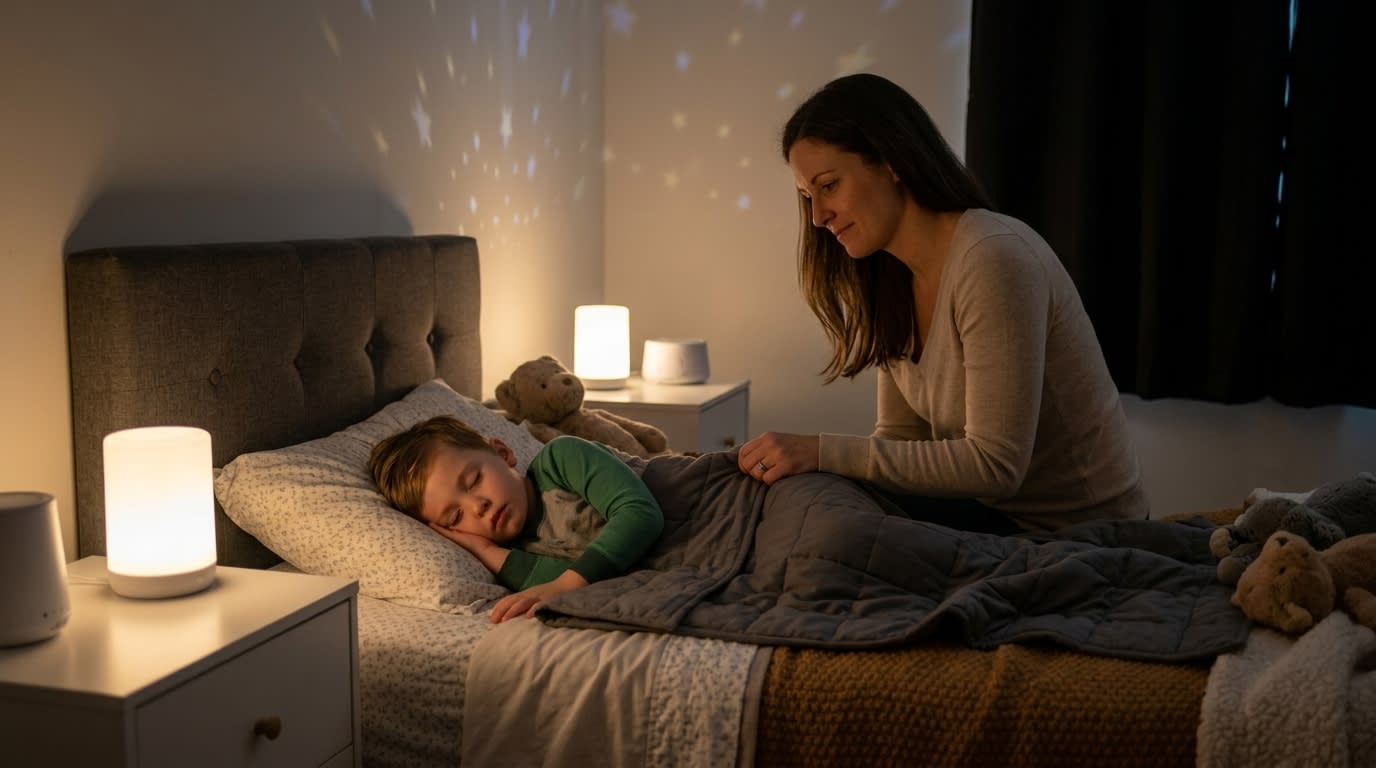
Sensory Differences and Sleep: When the Environment Matters
For some children, sleep is not simply about being tired enough.
The sensory environment around sleep can make a significant difference in how easily a child relaxes, stays asleep, or returns to sleep after waking.
Sounds, light, temperature, clothing, textures, movement, touch, smells, and even the feeling of the mattress can all affect how a child experiences bedtime.
Sensory Differences Are Individual
There is no single sensory profile associated with autism or any other developmental difference.
One child may be highly sensitive to sound while another actively seeks movement or pressure.
A child may be comfortable with a dark room but unable to tolerate a particular pajama fabric.
Another child may need more sensory input before their body feels ready for sleep.
The goal is to understand the individual child rather than create a generic sensory-friendly bedroom.
Hypersensitivity and Sleep
Some children experience ordinary sensations as unusually intense.
A small amount of light may feel very bright.
A quiet household noise may be distracting.
A seam in pajamas may feel irritating, or a change in temperature may wake the child.
When a child repeatedly resists bedtime, wakes shortly after falling asleep, or becomes distressed by the bedroom, consider whether the environment may be contributing.
This does not mean every sleep problem is sensory.
Sensory Seeking Can Affect Sleep Too
Sensory differences are not always about avoiding stimulation.
Some children actively seek movement, pressure, sound, or other forms of sensory input.
They may rock, bounce, roll, rub against bedding, hum, make repetitive movements, or repeatedly leave the bed.
These behaviors are not automatically signs that a child is not tired.
They may be ways of regulating the nervous system.
The Bedroom Environment
A child's sleep environment can be adjusted without turning bedtime into a complicated project.
Consider room temperature, lighting, background noise, clothing, bedding, and visual stimulation.
Some children sleep better with steady background sound that masks unpredictable noises, while others need as close to silence as possible.
Some prefer complete darkness, while others need a small amount of predictable light.
Clothing and Bedding Matter
For a sensory-sensitive child, pajamas and bedding can become a major source of bedtime resistance.
Tags, seams, elastic, tight waistbands, rough fabrics, heavy blankets, or certain textures may make it difficult to relax.
Appropriate choices can help.
You might offer two familiar pajama options or let the child choose between two comfortable sheets.
Sound and Sleep
Unexpected sounds can be particularly disruptive for children who are sensitive to auditory input.
Dogs barking, plumbing, traffic, siblings, appliances, or household conversations can become more noticeable once the child is lying quietly in bed.
A consistent sound environment can sometimes be easier to tolerate than unpredictable noise.
Any sound machine should be positioned safely and kept at an appropriate volume and distance.
Light and Visual Input
Light exposure affects the body's sleep-wake system, and some children are also especially sensitive to visual stimulation.
Bright overhead lights, hallway light, screens, or changing shadows can make winding down more difficult.
A calmer evening environment with lower lighting can help signal that the day is ending.
For children who are afraid of darkness, a consistent low-level night-light may be more helpful than repeatedly turning bright lights on and off.
Movement and Bedtime Regulation
Some children need movement before they can settle.
Gentle rocking, walking, stretching, or another familiar movement activity may help them transition from active play to rest.
Timing matters.
Vigorous activity immediately before lights out may make some children more alert, while movement earlier in the bedtime routine may help them regulate.
Observe your child's response rather than assuming more or less movement is always better.
Pressure and Touch
Some children find certain forms of pressure or touch calming, while others find touch overwhelming.
A parent may notice that cuddling or firm hugs help one child relax, while another child needs more personal space.
Never assume a sensory strategy is appropriate simply because it is popular online.
Especially with weighted sleep products, discuss safety with the child's healthcare or occupational therapy team and follow current safe-sleep recommendations.
Sensory Needs and Bedtime Transitions
The transition from daytime activity to sleep can be difficult when a child has trouble shifting attention or adapting to changes.
A predictable sequence can make the transition easier.
A visual bedtime routine can be helpful for some children: bathroom, pajamas, teeth, books, cuddle, bed.
The exact steps are less important than making the sequence understandable and predictable.
When a Child Says They Are Not Tired
A child who says they are not tired may genuinely be having difficulty shifting into a lower-arousal state.
Instead of arguing about whether the child is tired, focus on the routine and environment.
A calm transition, predictable expectations, and reduced stimulation may make it easier for the child's body to move toward sleep.
Persistent difficulty falling asleep may also warrant looking at schedule and circadian timing.
Sensory Differences and Night Wakings
Sensory needs do not stop once a child falls asleep.
A change in temperature, a noise, uncomfortable clothing, a sibling entering the room, or another sensory disruption can contribute to waking.
Look for patterns.
Does waking happen at a particular time?
Does it follow a household noise?
Does the child immediately seek a particular sensory experience?
These observations can help distinguish a sensory trigger from hunger, anxiety, a sleep association, or another cause.
Do Not Turn Every Behavior Into a Sensory Problem
Sensory differences can be important, but they should not become an explanation for every sleep difficulty.
Children wake for many reasons, and autistic children can experience the same ordinary sleep challenges as other children.
Consider the full picture: sleep schedule, naps, feeding, illness, discomfort, anxiety, developmental changes, sleep associations, and the environment.
A Responsive Approach to Sensory-Sensitive Sleep
Responsive sleep support begins with observation.
Instead of asking, "How do I make my child stop doing this?" ask, "What might my child be communicating?"
A child who covers their ears may be telling you something about sound.
A child who repeatedly gets out of bed may be seeking movement, avoiding discomfort, or struggling with the transition.
Once you understand the possible need, you can decide whether it can be accommodated, supported earlier in the routine, or gradually changed.
When to Seek Additional Support
If sensory-related sleep difficulties are persistent or significantly interfere with sleep, daytime functioning, school, or family life, professional support can be valuable.
An occupational therapist familiar with your child's sensory profile may help identify patterns and appropriate strategies.
Medical evaluation is also important when there are concerns such as snoring, pauses in breathing, significant daytime sleepiness, persistent pain, unusual nighttime movements, or a major unexplained change in sleep.
The Bottom Line
Sensory differences can have a meaningful impact on sleep, but there is no one sensory solution for every child.
Some children need less stimulation, while others need carefully chosen sensory input before they can settle.
The key is to observe the individual child and identify which sensations are helping, which are interfering, and which changes are realistic for the family.
A Tiny Sleep Studio Approach to Sensory Differences and Sleep
At Tiny Sleep Studio, I believe sensory differences deserve to be understood rather than treated as misbehavior.
Sleep support for an autistic or sensory-sensitive child should begin with curiosity:
What does this child experience at bedtime?
What helps their nervous system settle?
What is making sleep harder?
From there, we can create a responsive plan that combines appropriate sensory support, predictable routines, clear boundaries, and connection.
The goal is not to make a child tolerate an environment that feels overwhelming.
It is to create conditions in which sleep becomes more comfortable, predictable, and achievable.