
Guide
Toddler Separation Anxiety and Sleep: Why Your Toddler Suddenly Needs You More
Learn how separation anxiety can affect toddler sleep, including bedtime resistance, night wakings, naps, reassurance, independent sleep, and maintaining supportive boundaries.
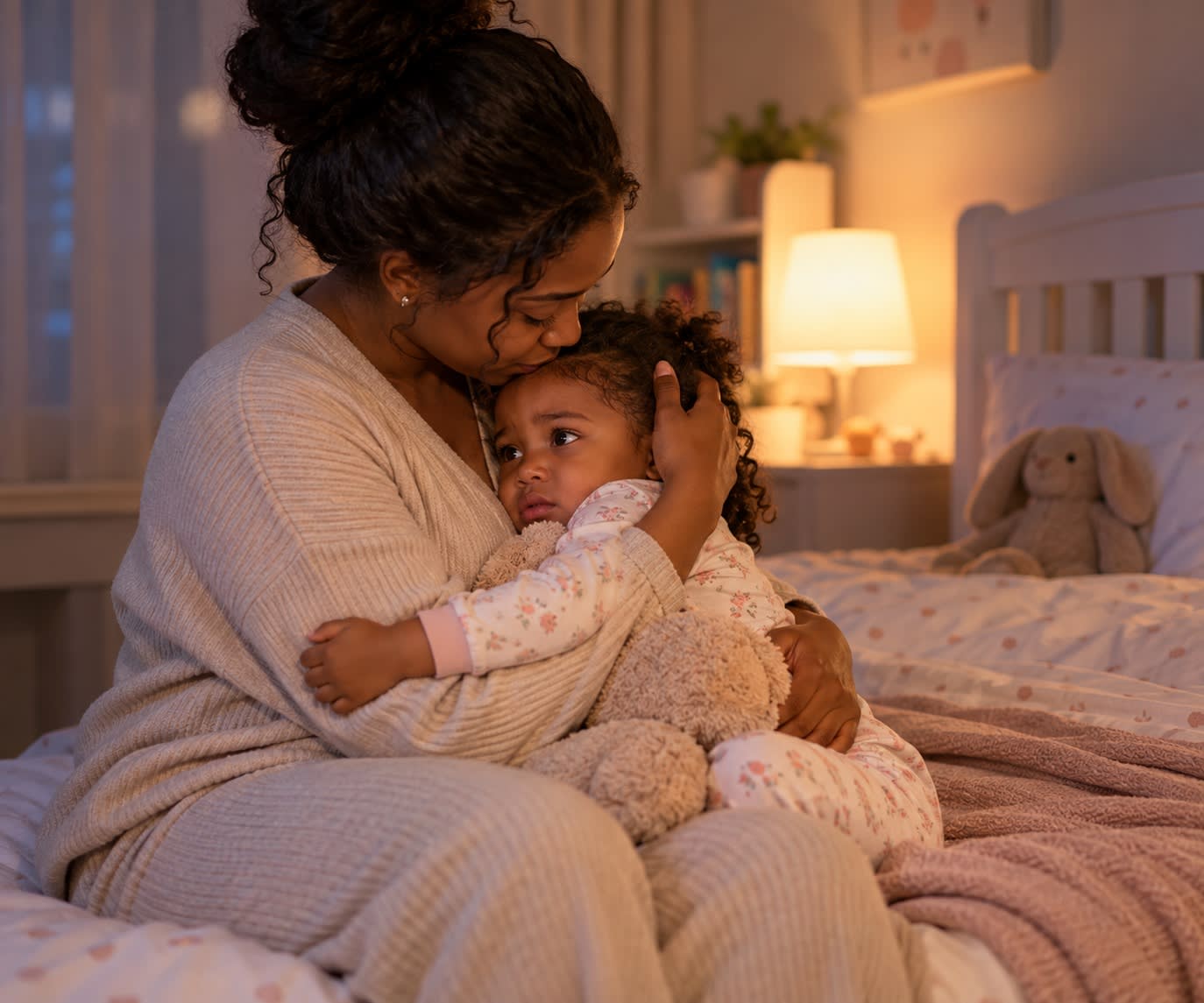
Toddler Separation Anxiety and Sleep: Why Your Toddler Suddenly Needs You More
By Tiny Sleep Studio
Can Separation Anxiety Affect Toddler Sleep?
Yes. Separation anxiety can have a significant effect on toddler sleep.
A toddler who previously went to bed easily may suddenly cry when you leave the room, refuse to fall asleep without you nearby, wake during the night looking for you, or become upset when they realize you are no longer there.
This can be exhausting for parents, especially when it seems to appear out of nowhere.
But separation anxiety is a normal part of development. Toddlers are becoming more aware of relationships, routines, and the people they depend on, and that growing awareness can make separation feel much harder.
Sleep is one of the longest separations a toddler experiences, so bedtime is often where these feelings become most obvious.
What Is Separation Anxiety?
Separation anxiety occurs when a child becomes distressed when a familiar caregiver leaves or is no longer within sight.
During the toddler years, children are developing a stronger understanding of relationships and are increasingly aware that parents can leave the room, go to work, or do something without them.
Your toddler may understand that you are coming back and still become upset when you leave. Knowing that a parent will return does not necessarily make the separation feel easy.
This is not manipulation, and it is not a sign that you have made your child too dependent on you.
It is a normal part of emotional development.
Why Does Bedtime Trigger Separation Anxiety?
Bedtime creates a long period of separation.
During the day, your toddler may see you repeatedly coming and going. At night, you may tuck them into bed and then leave the room for several hours.
For a toddler who is experiencing separation anxiety, that transition can feel difficult.
They may suddenly need another hug, another kiss, another story, or reassurance that you are still nearby.
The requests may continue even after the basic need has been met because what your toddler is really seeking may be connection and reassurance rather than another book or glass of water.
Why Does My Toddler Keep Getting Out of Bed?
A toddler who is anxious about separation may discover that getting out of bed brings you back into the room.
Even if your toddler is not intentionally trying to manipulate you, the interaction can become reinforcing.
Your child leaves the room, you return, your toddler receives connection, and the cycle repeats.
This does not mean you should ignore your toddler. It means you can respond to the emotional need while keeping the bedtime boundary consistent.
A calm return to bed, a brief reassurance, and a predictable response can provide both connection and structure.
What About Night Wakings?
Separation anxiety can also make normal nighttime awakenings more noticeable.
Toddlers naturally move through sleep cycles and may briefly wake during the night. A toddler who is experiencing separation anxiety may become fully alert and immediately look for a parent.
Your toddler may call your name, cry, leave the bed, or ask you to stay.
If you normally respond by lying beside your child until morning, your toddler may begin to expect that response at every waking.
There is nothing inherently wrong with providing comfort. The question is whether the current pattern is working for your family and whether everyone is getting enough rest.
Why Does My Toddler Suddenly Want Me to Stay Until They Fall Asleep?
A toddler who previously fell asleep independently may suddenly ask you to stay in the room.
This can happen during periods of separation anxiety, developmental change, illness, travel, a new sibling, starting school, or another major transition.
Your toddler may genuinely feel more secure when you are nearby.
Offering reassurance does not mean you have to permanently change your sleep routine.
You can provide connection while maintaining predictable boundaries.
For example, you might sit beside your child for a few minutes, offer a consistent phrase such as "You are safe, and I am nearby," and then gradually reduce the amount of time you remain.
How Can I Help My Toddler Feel Secure?
Predictability can be incredibly reassuring for toddlers.
A consistent bedtime routine helps your child know what is coming next and reduces uncertainty around the transition to sleep.
You can also create small rituals of connection.
A special bedtime phrase, a hug, a song, or a predictable goodnight routine can give your toddler something familiar to look forward to each night.
During the day, practice small separations and reunions. Let your toddler experience you leaving and coming back.
These repeated experiences can help reinforce the message that separation is temporary and that you return.
Should I Sneak Out of the Room?
Sneaking away may seem tempting because it can prevent a difficult goodbye, but for some toddlers it can actually increase anxiety.
If your child falls asleep believing you are beside them and wakes to discover you are gone, they may become more vigilant about whether you will disappear again.
A predictable goodbye can be more reassuring.
You can tell your toddler what is happening in simple language and follow through consistently.
For example, you might say, "I am going to leave the room now. You are safe in your bed. I will see you in the morning."
The exact words are less important than the consistency of the message.
What If My Toddler Cries When I Leave?
Crying is a form of communication.
Your toddler may be expressing that they do not like the separation even when they are safe and capable of falling asleep.
You can acknowledge the feeling without changing the boundary.
"I know you want Mommy to stay. You are safe. It is bedtime, and I will see you in the morning."
Your toddler may continue to protest.
That does not mean you have failed.
The goal is not to prevent every uncomfortable feeling. It is to help your child experience the feeling while knowing that they are safe, supported, and loved.
Can Separation Anxiety Affect Naps?
Yes.
A toddler may resist naps because daytime sleep also creates separation from a caregiver.
This can be particularly noticeable when a child has recently started daycare, preschool, or another regular separation during the day.
Your toddler may suddenly want to skip a nap, ask you to stay, or become more upset during the nap routine.
If your child still needs daytime sleep, try to keep the nap routine predictable.
If your toddler is genuinely transitioning away from a nap, separation anxiety may simply make the transition look more complicated than it actually is.
Looking at the child's overall sleep needs can help distinguish the two.
What About Daycare or Preschool?
Starting daycare or preschool can temporarily affect sleep.
Your toddler may spend the day practicing separation and then want additional connection at bedtime.
Some children become more clingy after starting school, while others appear completely fine during the day and release their emotions once they are reunited with their parents.
Extra connection after a long day can be helpful.
A few minutes of uninterrupted attention, cuddling, talking, or reading together can fill your toddler's emotional cup before the bedtime routine begins.
Does Comforting My Toddler Make Separation Anxiety Worse?
Comforting your toddler does not create separation anxiety.
Responsive parenting and secure attachment are not the cause of sleep problems.
At the same time, comforting does not mean you have to agree to every request.
You can offer reassurance while maintaining a boundary.
You can say yes to a hug while still saying no to a fifth bedtime story.
You can acknowledge that your child misses you while still leaving the room.
Connection and boundaries can exist together.
How Can I Encourage Independent Sleep?
If your toddler is ready to work toward more independent sleep, start with predictability.
Keep the bedtime routine consistent, decide what level of support you are comfortable providing, and communicate the plan simply.
Some families use gradual approaches, such as sitting near the bed and slowly increasing the distance over several nights.
Others prefer brief check-ins or another consistent method.
There is no single correct strategy.
The important part is that the approach is developmentally appropriate, emotionally supportive, and sustainable for your family.
When Should You Look Beyond Separation Anxiety?
Not every sleep disruption is separation anxiety.
Toddlers can also wake because of illness, discomfort, teething, changes in nap needs, environmental factors, nightmares, schedule changes, or other developmental issues.
If your toddler suddenly begins waking frequently and you notice significant snoring, breathing difficulties, pain, persistent illness, unusual daytime sleepiness, or another concerning symptom, speak with your pediatrician.
If the pattern continues even after the stressful period has passed, it may also be helpful to reassess the overall sleep schedule and bedtime routine.
The Bottom Line
Separation anxiety is a normal part of toddler development, but that does not make it easy for parents.
Bedtime can become especially challenging because it represents a long separation from the people your toddler depends on most.
Your toddler may ask you to stay, repeatedly leave the room, wake during the night looking for you, or suddenly need much more reassurance.
These behaviors can be exhausting, but they are not evidence that your child is trying to make bedtime difficult.
The goal is to provide reassurance without allowing bedtime to become an endless negotiation.
Predictable routines, clear boundaries, connection, and consistency can help your toddler gradually feel more secure about separation.
A Responsive Approach to Toddler Separation Anxiety and Sleep
At Tiny Sleep Studio, I believe toddlers should be able to experience secure connection while developing healthy sleep habits.
Separation anxiety does not need to be treated as a behavior that must simply be extinguished.
Instead, I look at what is happening developmentally, what your toddler is communicating, and what the family needs.
We can create a sleep plan that gives your toddler reassurance and connection while also helping them build confidence in falling asleep independently.
Your toddler is learning two important things at the same time: that you can leave, and that you come back.
Both lessons can be supported with patience, consistency, and love.