
Guide
When One Twin Wakes the Other: Helping Twins Sleep Without Chasing Perfect Silence
Learn why twins may wake each other, how to respond to normal sleep sounds, and how to create a predictable sleep environment without expecting perfect silence.
When One Twin Wakes the Other: Helping Twins Sleep Without Chasing Perfect Silence
When Twin Sleep Becomes a Cycle
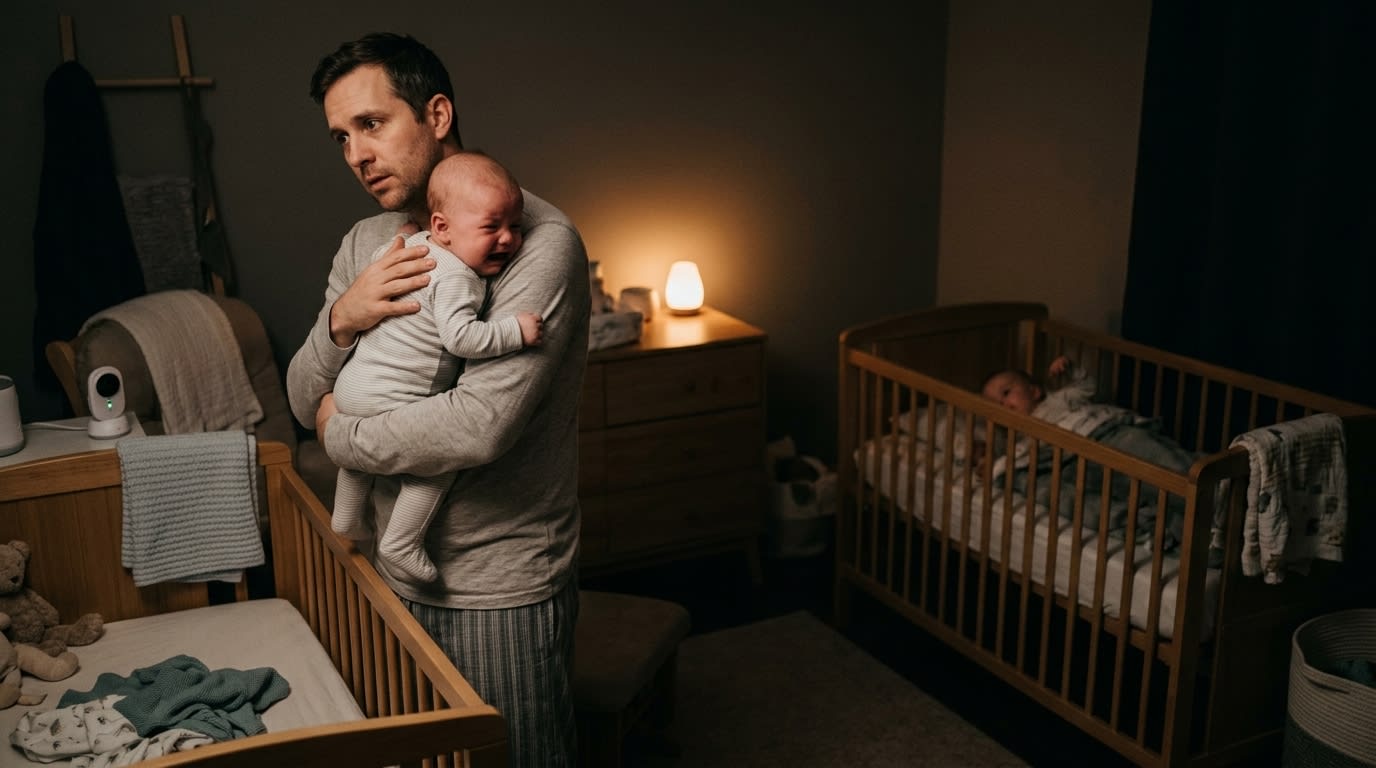
One of the most frustrating parts of having twins is watching one baby finally settle, only for the other to wake them a few minutes later.
A parent may spend an hour getting both babies to sleep, only to hear one cry and suddenly have two awake babies again.
Why Twins Wake Each Other
Twins share a room, but they do not necessarily have the same sleep temperament.
One may be a very light sleeper while the other is an active sleeper who grunts, moves, cries, or wakes frequently.
A baby's cry can also become a powerful cue for the other baby to wake.
Twins Often Become Familiar With Each Other's Sounds
Not every sound needs to be eliminated.
Many twins gradually become accustomed to the normal sounds their sibling makes during sleep.
Grunting, brief fussing, movement, and short vocalizations may occur without fully waking the other baby.
Pause Before Responding to Every Sound
When a baby makes a noise, parents do not always need to intervene immediately.
A brief pause can help determine whether the baby is truly awake or simply moving between sleep cycles.
This is especially useful when the other twin is sleeping peacefully.
But Respond to a Baby Who Clearly Needs You
A pause is not the same as ignoring.
If a baby is clearly awake, hungry, uncomfortable, or escalating in distress, respond.
The goal is to distinguish normal sleep sounds from a genuine need for support.
Should You Wake the Sleeping Twin?
When one twin wakes, parents often wonder whether they should wake the other.
There is no universal answer.
For young babies, particularly premature babies or babies with specific feeding instructions, the pediatrician's feeding plan should take priority.
If the Twins Are Older and Growing Well
When twins are medically established, growing appropriately, and no longer require scheduled feeds, parents may have more flexibility.
Some families choose to keep the sleeping twin asleep and settle only the baby who woke.
Others find that gently synchronizing the twins helps create a more manageable schedule.
The Goal Is Not Complete Silence
Trying to make a twin nursery completely silent can become exhausting.
Normal household sounds and sibling noises are part of life.
Instead of aiming for silence, aim for a predictable sleep environment that reduces unnecessary stimulation.
A Consistent Sleep Environment Can Help
Darkness, comfortable temperature, appropriate sleep clothing, and consistent background conditions can help both babies.
Some families find that continuous background sound reduces the contrast between a quiet room and a sudden cry, while other babies are more sensitive to sound.
The response should be individualized.
Safe Sleep for Twins
Twins should have their own appropriate safe sleep spaces.
Babies should be placed on their backs for sleep on firm, flat sleep surfaces that are free of loose bedding and other soft objects, following current safe-sleep guidance.
Parents should not use unsafe sleep arrangements simply to prevent one twin from waking the other.
When One Twin Is a Much Lighter Sleeper
If one twin wakes at nearly every sound, it may help to look at the entire sleep picture.
Is that baby overtired?
Are naps appropriately timed?
Is the baby getting enough sleep opportunity?
Is the room too stimulating?
Is there an underlying discomfort?
The Timing of Bedtime Matters
Sometimes the waking pattern is related to when the twins are put down.
A baby who is overtired may sleep more restlessly and wake more easily.
A baby who is not tired enough may also have difficulty settling and may become more active during the night.
Different Sleep Needs Are Normal
One twin may naturally need more sleep than the other.
One may need a longer nap, an earlier bedtime, or more help settling.
Trying to force both babies into an identical schedule can sometimes make the waking problem worse.
Premature Twins May Need More Flexibility
Premature twins may have different adjusted-age sleep needs, feeding requirements, and developmental patterns.
One twin may become ready for longer sleep stretches before the other.
Medical and nutritional needs should come before schedule synchronization.
When a Twin Wakes From Hunger
If one baby wakes because they are genuinely hungry, feeding that baby should take priority.
As twins mature and daytime intake becomes well established, parents can gradually consider whether every waking is nutritional or whether some wakings are related to comfort, regulation, or sleep-cycle transitions.
Responsive Settling Can Protect Both Babies
When one twin wakes, parents can use the least amount of intervention that is appropriate while remaining responsive.
A calm voice, gentle reassurance, a brief touch, or picking up and soothing the baby may be enough.
If the baby needs feeding or more substantial support, respond to that need.
What If the Crying Wakes the Other Twin?
Sometimes the second baby will wake no matter what the parent does.
This does not mean the family has failed.
Once both babies are awake, the focus can shift to helping them settle again rather than trying to prevent every possible waking.
Create a Shared Reset
If both twins wake, a short, predictable reset can help.
Keep the lights low, minimize stimulation, respond to feeding needs, and return to the familiar bedtime or nap routine.
Avoid turning an accidental waking into the beginning of a new play period when sleep is still the goal.
When Separate Sleep Spaces May Help
If one twin repeatedly disrupts the other despite reasonable scheduling and environmental adjustments, parents may consider whether separate sleep spaces are appropriate.
This does not have to mean permanently separating the twins.
It can simply be a practical adjustment while sleep becomes more consolidated.
Do Not Blame the Twin Who Wakes
It is easy to feel frustrated with the baby who repeatedly wakes the other.
But neither baby is doing anything wrong.
Waking is part of infant sleep, and some babies simply have more fragmented sleep than others.
Protect the Parents Too
Twin sleep problems quickly become parental sleep problems.
If one twin wakes the other repeatedly, parents may end up responding to two babies many times each night.
Sharing nighttime responsibilities, taking shifts when possible, and accepting practical help during the day can be just as important as changing the babies' schedule.
When to Look Beyond Normal Twin Sleep
Persistent snoring, pauses in breathing, unusual breathing patterns, significant feeding difficulties, poor growth, chronic discomfort, or a major unexplained change in sleep should be discussed with the pediatrician.
A baby who wakes frequently should not automatically be treated as a behavioral sleep problem.
The Bottom Line
When one twin wakes the other, the goal is not to create a perfectly silent nursery.
The goal is to understand why the waking is happening, protect each baby's sleep opportunity, and respond appropriately when a baby genuinely needs help.
A Tiny Sleep Studio Approach
At Tiny Sleep Studio, we help twin families find the balance between individual needs and practical structure.
We consider each baby's temperament, adjusted age when relevant, feeding, sleep pressure, sensory needs, environment, and developmental stage.
Twins do not have to sleep identically to sleep well.
Sometimes the answer is better timing.
Sometimes it is a different sleep environment.
Sometimes it is simply giving a baby more time to learn that their sibling's normal sounds are not a reason to fully wake.
And sometimes the babies genuinely need different approaches.
Our goal is not to eliminate every waking.
It is to help families create a calmer, more sustainable rhythm in which both babies can develop healthy sleep while parents get the support and rest they need.